
A Local’s Guide to Washington, D.C.’s Cherry Blossom
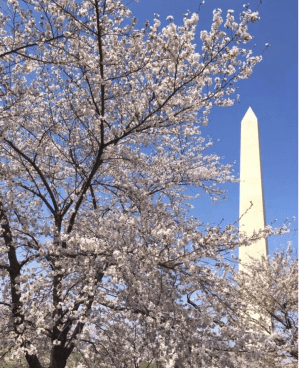
Cherry blossoms are Washington, D.C.’s annual announcement that spring has officially clocked in. For most of the year, the trees blend into the scenery around the Tidal Basin. Then the blossoms arrive, the waterfront turns pink and white, and thousands of adults start discussing “peak bloom” with the intensity of election analysts.
The flowers are beautiful, but the story behind them is just as good. It features a determined traveler, a first lady, a Japanese chemist, an unfortunate first shipment and one extremely patient international friendship. At D.C. Crawling, we specialize in the Washington stories that deserve more attention. So before you fill your camera roll, meet the people who gave the District its most famous spring tradition.
Pair the Blossoms with D.C. Crawling
The Tidal Basin handles the flowers. D.C. Crawling handles the spies, bootleggers, partying politicians and the surprisingly important role beer played in Washington history.
After a morning among the blossoms, join our adults-only Insider’s Pub Crawl near the White House. An expert local guide leads couples, friends and solo travelers to local taverns while sharing the hidden and hilarious stories that skipped the official plaques.
The tour lasts 2 hours and 15 minutes and runs daily at 4:00 p.m. and 7:00 p.m. Drinks are available for purchase at each stop, so everyone can select their preferred form of historical research.
Eliza Scidmore Would Not Take No for an Answer
Washington owes its cherry blossoms to a woman with an excellent idea and absolutely no interest in giving up.
In 1885, writer, photographer and world traveler Eliza Ruhamah Scidmore returned from her first trip to Japan. She admired the country’s flowering cherry trees and believed they would look spectacular along Washington’s newly reclaimed Potomac waterfront.
The government was less enthusiastic. Scidmore presented her idea to the superintendent responsible for Washington’s public grounds and received a firm no. She then presented it to the next superintendent. And the next one. According to the National Park Service’s history of Eliza Scidmore, she continued making her case for 24 years.
That is no longer a suggestion. That is a campaign.
Her persistence finally found the right audience in 1909 when she wrote to First Lady Helen Herron Taft. Taft had lived in Japan, understood Scidmore’s vision and quickly supported planting cherry trees along the waterfront.
The First Trees Had a Very Short Stay
Around the same time, Japanese chemist Dr. Jokichi Takamine learned about the plan. He offered 2,000 cherry trees, and Japanese consul Kokichi Mizuno suggested presenting them as a gift from Tokyo.
The trees reached Washington in January 1910. Unfortunately, inspectors discovered insects and disease that threatened American plants. The government ordered the trees destroyed.
It was an awkward diplomatic moment, but officials in Japan responded with generosity instead of walking away. Tokyo Mayor Yukio Ozaki arranged a second gift. This time, experts carefully prepared and inspected 3,020 trees from 12 varieties before sending them across the Pacific.
The sequel had more trees, better quality control and a much happier ending.
The Valentine’s Day Shipment That Arrived in March
The second shipment left Yokohama aboard the S.S. Awa Maru on February 14, 1912. That is where the Valentine’s Day connection belongs. The trees did not arrive in Washington until March 26 after crossing the ocean and traveling across the United States by rail.
The following day, First Lady Helen Taft and Viscountess Chinda, the wife of the Japanese ambassador, planted two Yoshino cherry trees on the northern side of the Tidal Basin. Those two original trees still stand near the John Paul Jones Memorial, accompanied by a bronze plaque commemorating the occasion.
A quiet planting witnessed by only a small group eventually grew into one of Washington’s most recognizable traditions. Not bad for a ceremony without a parade, fireworks or anyone live-streaming it.
How the Blossoms Became a Washington Tradition
Workers continued planting cherry trees around the Tidal Basin and East Potomac Park for several years. Washington held its first official Cherry Blossom Festival in 1935, turning the annual bloom into a public celebration of spring and the friendship between Japan and the United States.
Today, nearly 4,000 cherry trees grow across West and East Potomac Parks, the Tidal Basin and the Washington Monument grounds. Fewer than 100 trees from the original 1912 gift survive, which makes finding the first two planted by Taft and Chinda especially worthwhile.
The modern National Cherry Blossom Festival includes art, music, food, cultural programs and events throughout the city. The blossoms remain the headliners, but Washington has built them an impressive supporting cast.
Make the Most of Your Cherry Blossom Visit
Peak bloom changes with the weather, so check the Festival’s official Bloom Watch before choosing your Tidal Basin day. Arrive early in the morning or visit toward evening for cooler temperatures, softer light and more room to admire the view.
Wear comfortable shoes because the best way to enjoy the area is on foot. Walk around the Tidal Basin, look for the plaque beside the original trees and continue toward the Washington Monument grounds or East Potomac Park if your feet are still feeling ambitious.
Most importantly, admire the blossoms without climbing the trees, pulling branches or picking flowers. The trees have already survived an ocean crossing, more than a century of Washington weather and countless photo sessions. They have earned a little personal space.
Come for the Blossoms, Stay for the Stories
The cherry trees are more than a colorful background for spring photos. They tell a story about persistence, international friendship and what can happen when one determined traveler refuses to let a good idea disappear into a government filing cabinet.
After you meet Washington’s most famous trees, trade the Tidal Basin for local taverns and discover more stories hiding around the nation’s capital. Book the Insider’s Pub Crawl directly with D.C. Crawling and continue exploring Washington with history, humor and a cold drink.