
The D.C. Bootlegger Who Sold Liquor Inside Congress
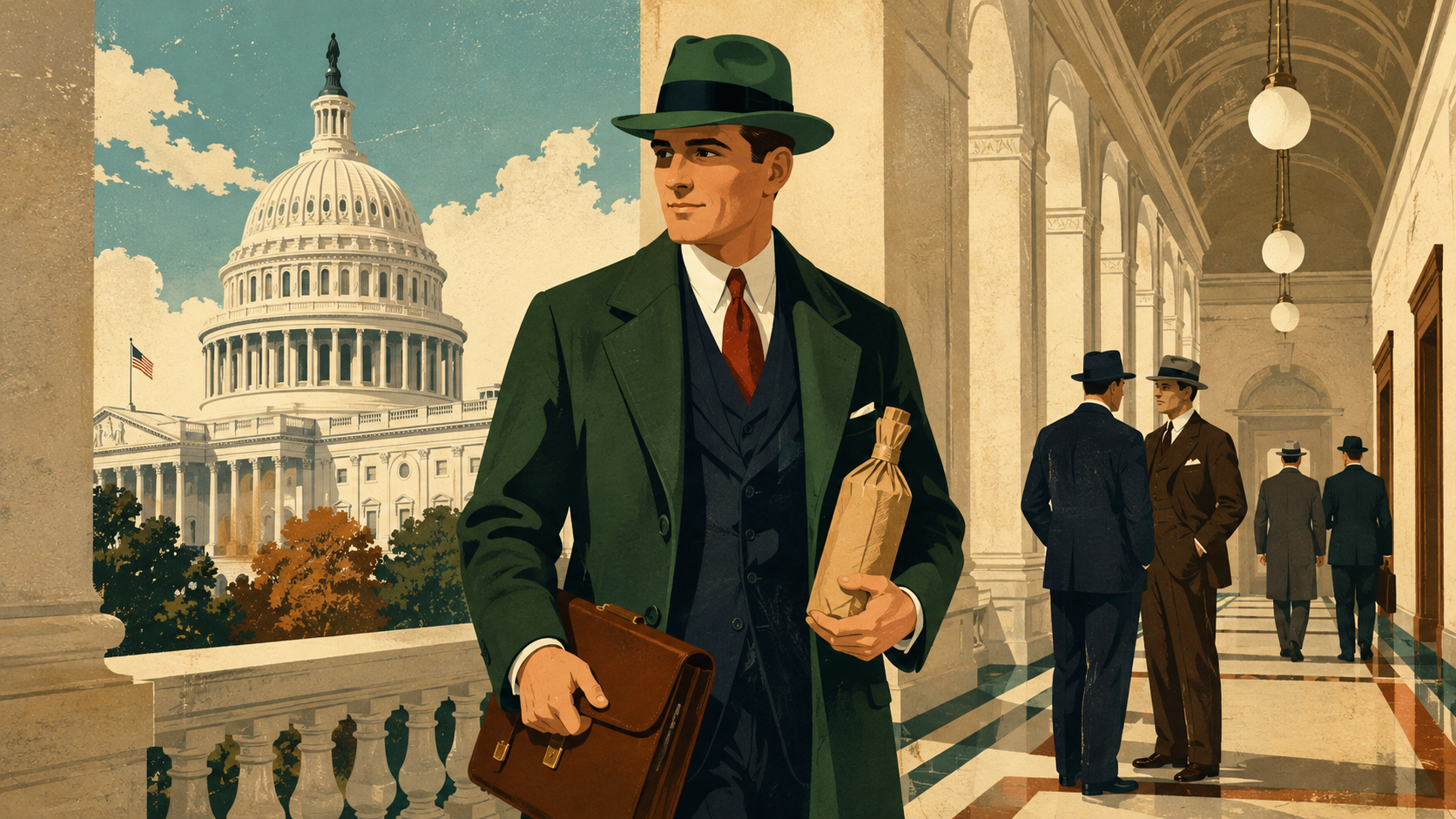
Congress wrote the nation’s laws during Prohibition. One enterprising D.C. bootlegger found office space inside the building.
George Cassiday, better known as the Man in the Green Hat, supplied liquor to lawmakers for years. His operation mixed political access, astonishing nerve and the sort of workplace delivery service that would give any modern compliance department a small fire.
D.C. Went Dry Before the Country Did
Washington’s legal drought began early. The Sheppard Act took effect on November 1, 1917, more than two years before national Prohibition began. The law closed the District’s saloons and prohibited the manufacture and sale of alcoholic drinks, though demand remained notably alive.
The Library of Congress notes that Washington eventually had as many as 3,000 speakeasies. Members of Congress lived and worked in the same thirsty city as everyone else. They also had convenient access to a man willing to solve a supply-chain problem.
Enter George Cassiday, Briefcase in Hand
Cassiday was a World War I veteran. According to the U.S. House of Representatives historian, a pair of representatives asked him in 1920 to obtain liquor for them. That initial request grew into a regular business serving lawmakers.
He transported bottles in a briefcase and operated from the House Office Building. The job required discretion, but Cassiday did not spend his days sprinting through secret tunnels. He became a familiar presence and later estimated that a large share of Congress drank, regardless of the law Congress had helped impose.
The arrangement lasted about five years. In 1925, Capitol Police arrested him while he delivered six quarts of whiskey to a House member. Cassiday happened to be wearing a light green felt hat, and the description reached reporters. The nickname stuck. The arrest ended his House operation, but not his congressional customer base.
The Senate Years and the Final Sting
Cassiday shifted his work to the Senate Office Building. He stored liquor in a basement room and continued making deliveries. A 1929 raid on his home and a 1930 sting finally ended the operation. According to the U.S. Senate Historical Office, federal agents arrested him after arranging a liquor delivery behind the Senate Office Building.
That year, Cassiday wrote a series of articles for The Washington Post describing his business and his congressional clients while keeping individual customer names private. The revelations landed at a politically awkward moment. Prohibition’s defenders were trying to argue that the law could work, while a bootlegger explained that he had been conducting brisk trade inside the legislative branch.
His story did not single-handedly end Prohibition. It did, however, make the hypocrisy unusually easy to picture: a law on the books, liquor in the briefcase, and customers down the hall.
Hear D.C.’s Hidden History Over a Drink
The Man in the Green Hat belongs to a deep file of Washington stories involving power, appetite and people behaving badly within sight of a flag. D.C. Crawling’s Insider’s Pub Crawl explores that side of the city with an expert guide, historic bars and local pubs near the White House.
The 21+ public crawl runs daily at 4:00 p.m. and 7:00 p.m. and lasts 2 hours and 15 minutes. Drinks are purchased separately at each stop, giving every guest control of the tab. Along the way, guides share hidden and hilarious tales of bootleggers, spies and partying politicians. The public group creates an easy setting to meet fellow travelers while the guide connects the facts, punch lines and places.
Bring valid identification, wear comfortable shoes and arrive ready to hear the stories that rarely make a marble inscription.
A Fountain With Terrible Timing
The District also preserves a wonderfully clumsy artifact from the temperance movement. Dentist and reformer Henry Cogswell donated the Temperance Fountain in 1882, hoping that free cold water would steer people away from saloons.
The fountain’s ice reservoir was expensive to maintain, so the water stopped flowing. It later stood in front of a liquor store. The National Park Service now describes the fountain as “ugly but interesting,” a brisk review from an agency that usually lets historic objects keep their dignity.
Taken together, Cassiday and the fountain reveal a useful truth about Prohibition-era Washington. Official intentions could be grand, enforcement could be uneven, and irony maintained excellent office hours.
The Man Behind the Legend
Cassiday eventually left bootlegging and lived until 1967. By then, the Twenty-First Amendment had repealed national Prohibition, and D.C. had resumed legal alcohol sales in 1934. His green hat, congressional route and remarkable longevity in the trade secured his place in local lore.
Today, the story feels tailor-made for Washington because it is. Politics set the rule, personal habits bent it, and a resourceful operator found the door marked “staff only.”
To hear more tales of D.C. bootleggers and the capital’s wonderfully unpolished past, book the Insider’s Pub Crawl and let the next round of history arrive in a glass.