
The Day Gunfire Reached Blair House: Truman’s Temporary White House
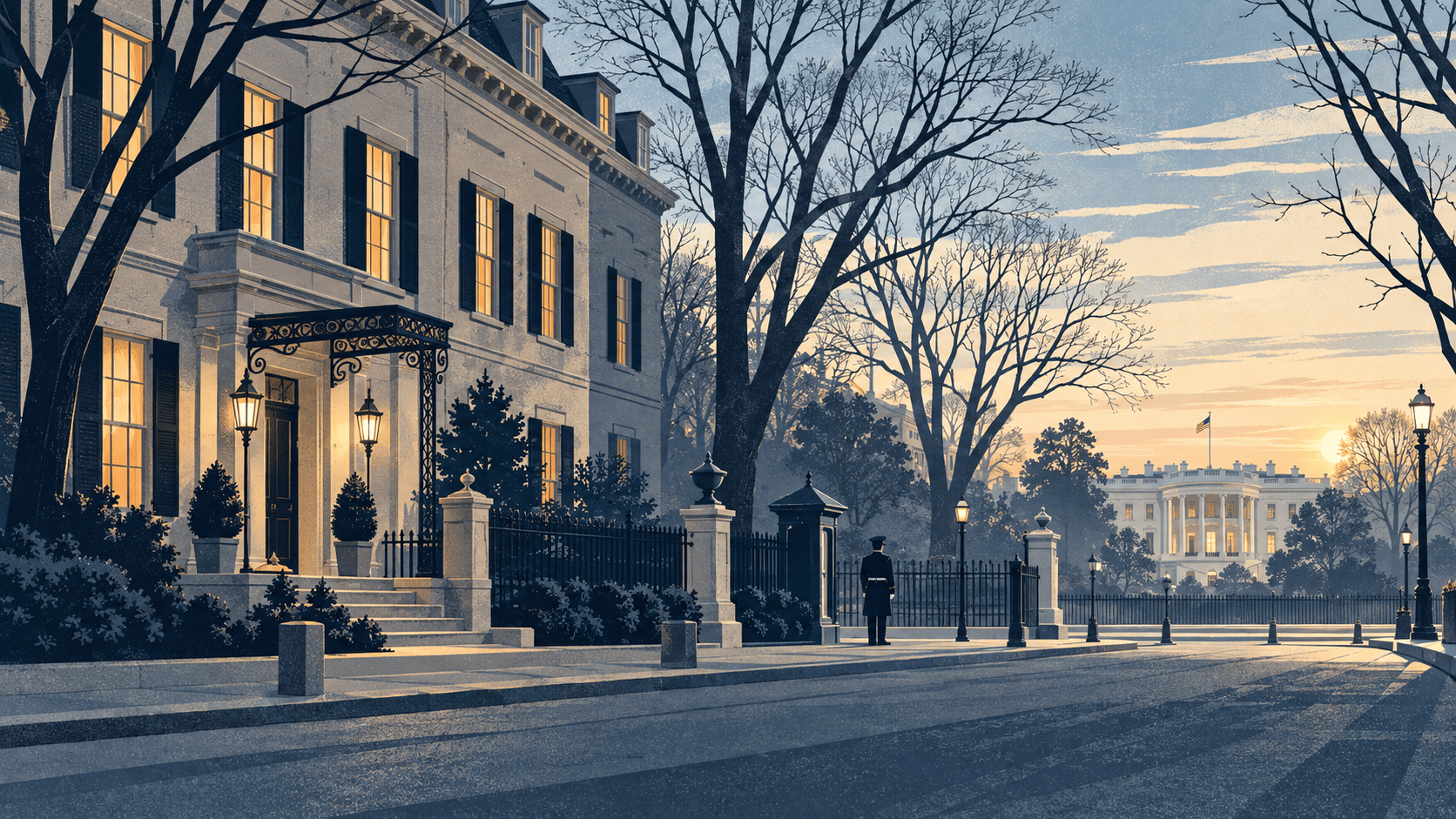
On a November morning in 1950, Harry Truman was in bed across from the White House when gunfire broke the quiet. The president was not staying at 1600 Pennsylvania Avenue: a major renovation had sent his family to Blair House, directly across the street. That detail turns a familiar view of the White House neighborhood into a striking piece of lived history, one that deserves care as well as attention.
The president’s home was being rebuilt
Blair House began as a private residence in the early nineteenth century. The U.S. government purchased it in 1942 to host foreign leaders and other official guests. A few years later, the White House’s structural problems became impossible to ignore. Floors sagged, ceilings were unsafe, and President Truman ordered a full renovation. From 1948 to 1952, Blair House served as the president’s temporary home. People sometimes called it “the Truman White House,” though its role was much more than a convenient address.
The arrangement put the president and his family just across Pennsylvania Avenue from the White House. Diplomats and officials continued to come and go, while the old executive residence was dismantled and rebuilt around a steel frame. The city’s ceremonial center was still operating, but the household at its center had moved to a historic home most visitors pass without knowing its story.
A 1950 attack at the front steps
On November 1, 1950, Puerto Rican nationalists Oscar Collazo and Griselio Torresola attempted to reach Truman at Blair House. Their goal was to draw attention to Puerto Rico’s independence movement. They opened fire outside the house and exchanged gunfire with White House police and Secret Service officers. Truman was awakened upstairs and urged to get away from the window.
The attack ended with Torresola dead and Collazo wounded and captured. Three White House policemen were injured. Leslie Coffelt, who was on duty in a guard booth outside, was mortally wounded. He returned fire and killed Torresola before he died later that day. Blair House says Coffelt’s badge is displayed in its security office in his honor. The White House Historical Association describes him as the only Secret Service officer to die in defense of a president. Keeping those details attached to named sources matters when retelling a story often compressed into a single dramatic sentence.
Truman was not injured. He later said the attack did not change his schedule, though the event led to additional attention to the security of the presidential residence. The details are startling, but this is not a ghost story or a piece of political theater. It is an account of violence, public service, and the people who put themselves between an armed attack and a president.
What the address tells you about the city
Blair House stands at 1651 Pennsylvania Avenue NW, directly across from the White House. It is an official guest house and is not a regular public museum, so admire it from the public streets and follow current security guidance. The White House Historical Association’s photo gallery and Blair House’s own history page offer a fuller record, including the renovation years and the attack.
The setting also helps explain how Washington’s landmarks fit together. Lafayette Square is just to the north of the White House. Pennsylvania Avenue carries visitors, residents, diplomats and workers through a neighborhood that has never been only a backdrop for monuments. The blocks have held homes, hotels, demonstrations, receptions and ordinary commutes alongside the biggest public events in the country.
A neighborhood best explored with context
A walk through this part of Washington can feel familiar even on a first visit: the White House fence, Lafayette Square, the broad avenue, the offices and hotels nearby. Knowing that Truman slept in Blair House during the renovation, or that a guard post once stood outside its door, changes what you notice. It gives the view another layer without pretending a visitor can see inside the house.
D.C. Crawling’s Insider’s Pub Crawl takes place in the surrounding White House neighborhood and explores a different part of its social history through tavern stories, political characters and the city’s drinking culture. The tour is two hours and 15 minutes, with four bar stops and a few blocks of walking. The route and bars vary. It is an evening experience for guests 21 and older, and drinks are bought separately; purchasing one is optional.
The contrast is part of what makes this pocket of D.C. memorable. By day, the architecture and official addresses seem to tell a story of presidents and institutions. A guide can also point to the less formal history that gathered in the surrounding streets: who met where, what people whispered, and how Washington’s social life carried on beside the machinery of government. Blair House reminds us that even the most familiar view has a private, human history just across the avenue.